
BELGRAD
type: urban planning, educational
size: 11 ha
location: Belgrade, Serbia
status: competition
year: 2011
team: Alba Labuda, Hugon Kowalski, Adam Wiercinski, Borys Wrzeszcz,
I miejsce w XXXI edycji konkursu im. Władysława Czarneckiego /
I prize - XXXI edition of Wladyslaw Czarnecki competition
PL
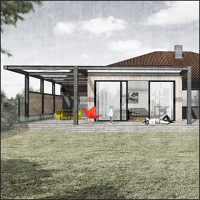
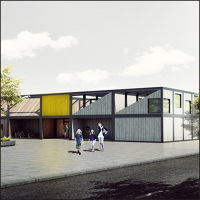
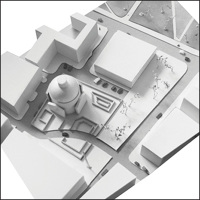
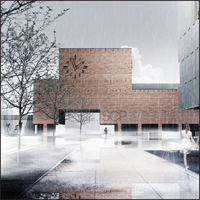
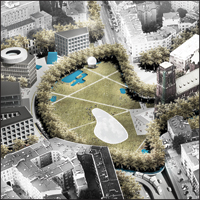
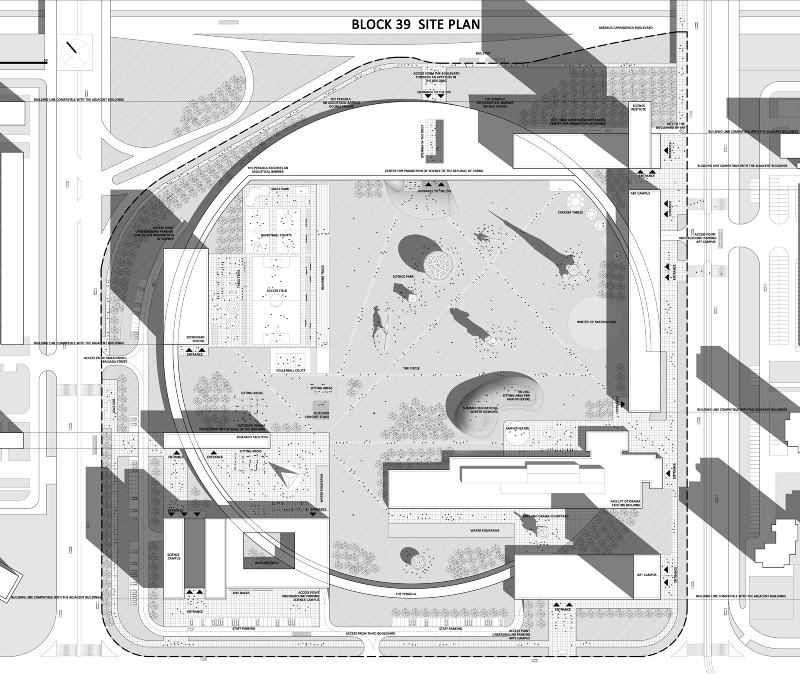
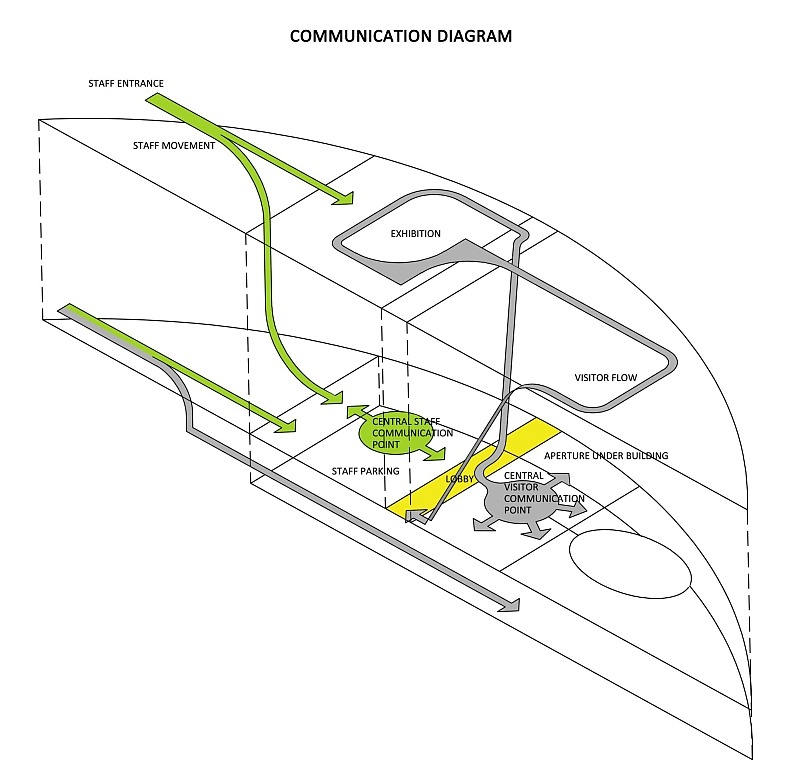
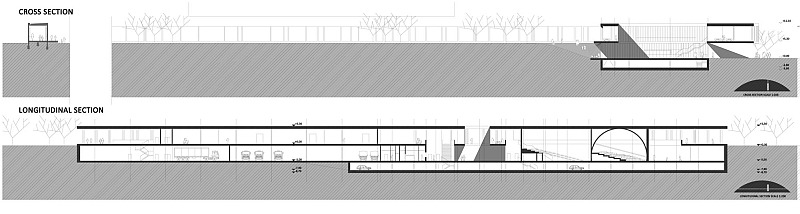
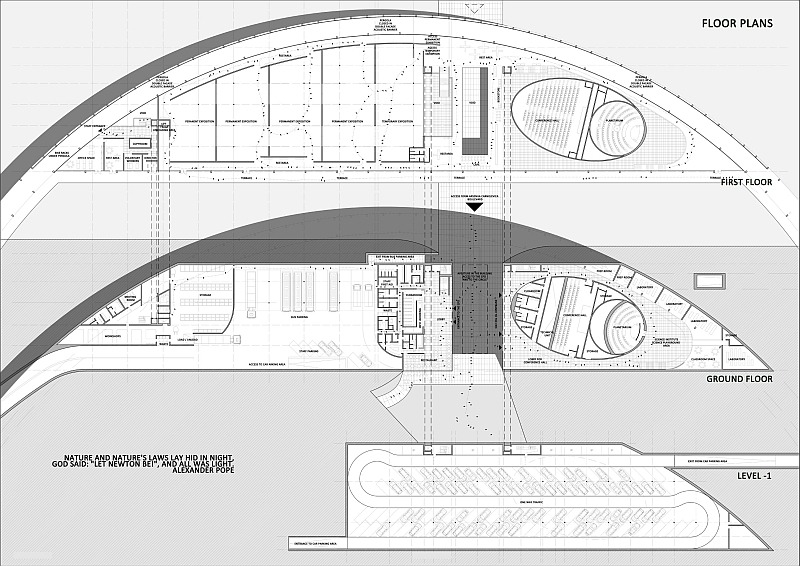
Projekt powstał na międzynarodowy konkurs na Centrum Promocji Nauki i otaczający go kampus w Belgradzie. Dzielnica Nowy Belgrad znajduje się w zachodniej cześć miasta, na lewym brzegu Sawy. Dzielnica zaprojektowana została w duchu modernizmu. Podzielona jest na ponumerowane bloki urbanistyczne, symetryczne do dominanty kompozycyjnej, którą jest Palace of Serbia- modernistyczny budynek rządowy powstały w 1947 roku. Działka konkursowa to blok 39 o powierzchni 11 hektarów. Od strony północnej i zachodniej graniczy w autostrada e-75. W pierwotnym założeniu urbanistycznym w tym bloku powstać miał cały kampus uniwersytecki. Z tego planu powstał tylko budynek wydziału teatrologii w 1974 roku zaprojektowany przez znanych serbskich architektów Aleksandra Stjepanovica i Bozidara Jankovica. Centrum Promocji Nauki w założeniach konkursowych miało zostać ulokowane w północnej części działki i odgradzać kampus od autostrady. Oprócz Centrum Promocji Nauki na działce konkursowej miał powstać ogród nauki i wydziały dla 10 tys. studentów :Inżynierii Elektrycznej, Matematyki, Fizyki, Komputerowy, Centrum Nanotechnoligii i Instytut Naukowy . Budynek Centrum Promocji Nauki ma formę półksiężyca, przyklejonego do wewnętrznej ściany pergoli otaczającej cały kwartał ( staje sie płotem, wyraźną granicom miedzy otaczającymi blokami urbanistycznymi a tajemniczym ogrodem- ogrodem nauki). Blok 39 jest terenem, który opada w kierunku północnym, różnica wysokości wynosi 3 m. Ze względu na ten fakt do Budynku Centrum Promocji Nauki i do ogrodu nauki przechodzi sie pod pergola. Pozostałe budynki uniwersyteckie zostały rozmieszczone na pergoli, która staje się łącznikiem, podstawowym kanałem komunikacyjnym miedzy budynkami. Budynki wydziałów nawiązują linia zabudowy oraz wysokościami do otaczających budynków mieszkalnych (blok 38 i 28) . Pergola poprzez swoja funkcje i wielkość ma sprowadzić blok 39 do ludzkiej skali. Wprowadza łączność nie tylko pomiędzy budynkami ale także jednoczy trzy generacje, które mają bawić sie, uczyć i pracować w tym nowym środowisku.
EN
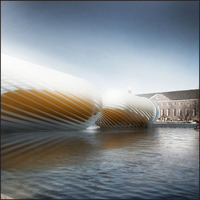
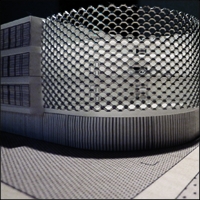
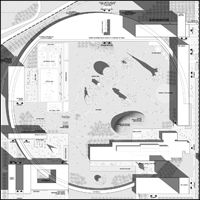
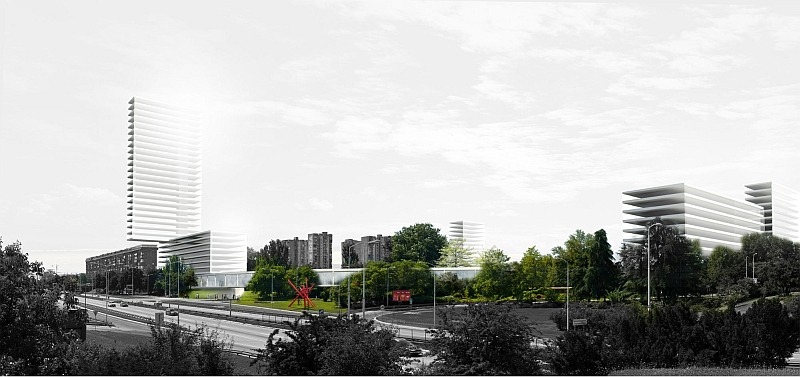
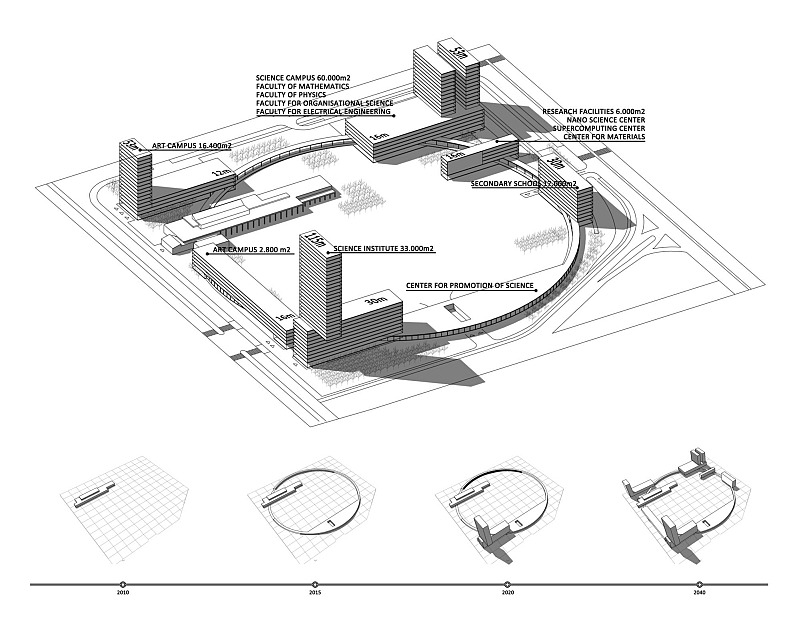
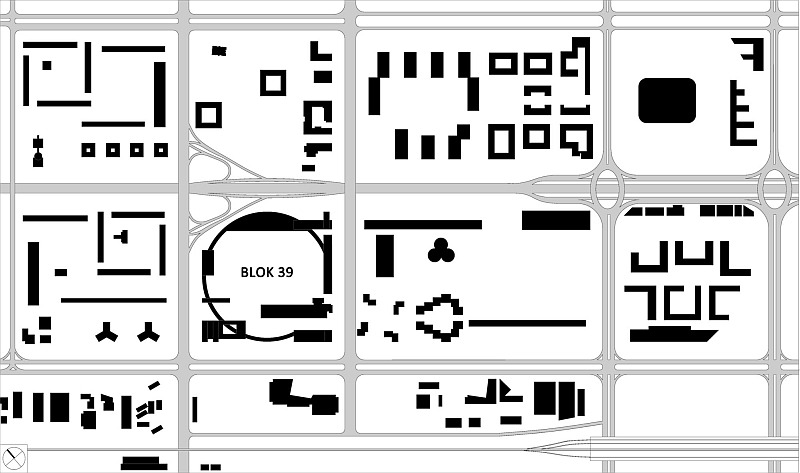
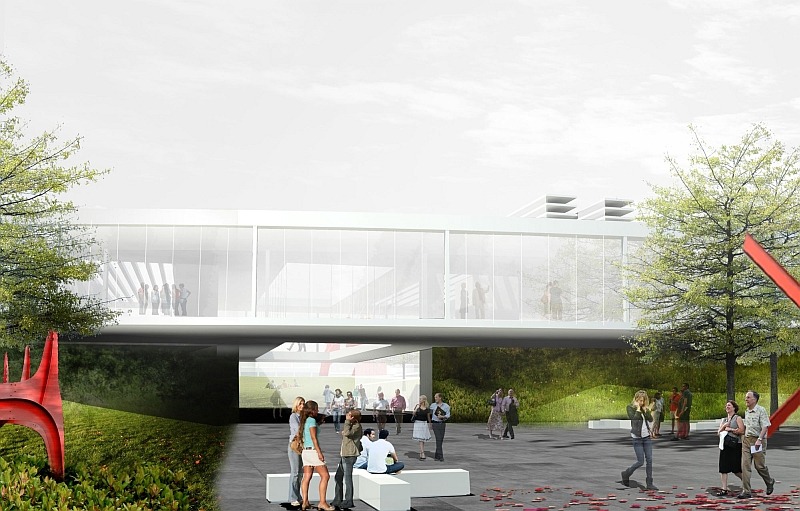
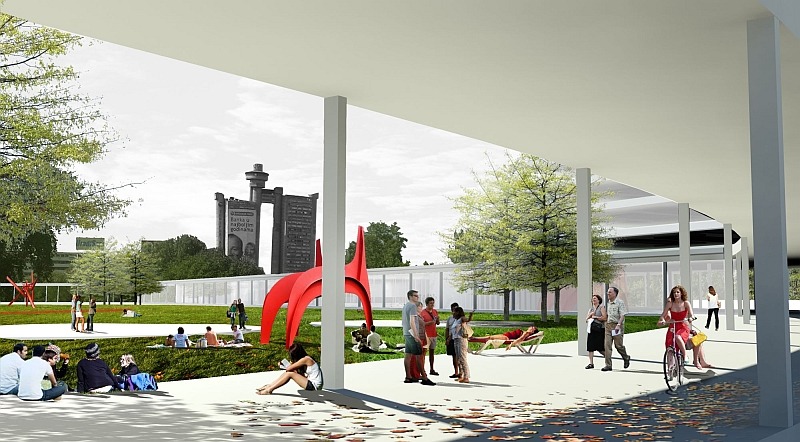
The project was an international competition for the Centre for the Promotion of Science and the surrounding campus in Belgrade. New Belgrade district located in the western part of the city, on the left bank of the Sava River. District was designed in the spirit of modernism. It is divided into numbered blocks, urban, symmetrical to the dominant compositional, which is the Palace of Serbia-modernist government building built in 1947. Plot to block 39 competition with an area of 11 hectares. From the northern and western borders of the highway E-75. The primary assumption in this urban block was built the university campus. With this plan, the building was only theater department in 1974, designed by renowned architects Serbian Aleksandra Jankovic Stjepanovica and Bozidara. Center for Science in the assumptions of the competition was to be located in the northern part of campus land and isolate ourselves from the highway. In addition to the Center for Science in the parcel competition had created a garden departments of science and for 10 thousand students: Electrical Engineering, Mathematics, Physics, Computer, Nanotechnology Center and Research Institute. Centre for the Promotion of Science Building is a form of a crescent, glued to the inner wall of the pergola surrounding the quarter (it becomes a fence, clear boundaries between urban blocks surrounding a mysterious garden-a garden of learning). Block 39 is an area which falls in the north, the difference in height is 3 m Due to this fact to the Building Centre for the Promotion of Science and the Science of the garden you move the pergola. Other university buildings are spread over the pergola, which becomes the link, the primary communication channel between the buildings. Buildings departments establish building lines and heights of the surrounding buildings (block 38 and 28). Pergola with its functions and has reduced the size of the block 39 to a human scale. It introduces not only the connectivity between buildings but also unites three generations to enjoy, learn and work in this new environment.


size: 11 ha
location: Belgrade, Serbia
status: competition
year: 2011
team: Alba Labuda, Hugon Kowalski, Adam Wiercinski, Borys Wrzeszcz,
I miejsce w XXXI edycji konkursu im. Władysława Czarneckiego /
I prize - XXXI edition of Wladyslaw Czarnecki competition
PL
Projekt powstał na międzynarodowy konkurs na Centrum Promocji Nauki i otaczający go kampus w Belgradzie. Dzielnica Nowy Belgrad znajduje się w zachodniej cześć miasta, na lewym brzegu Sawy. Dzielnica zaprojektowana została w duchu modernizmu. Podzielona jest na ponumerowane bloki urbanistyczne, symetryczne do dominanty kompozycyjnej, którą jest Palace of Serbia- modernistyczny budynek rządowy powstały w 1947 roku. Działka konkursowa to blok 39 o powierzchni 11 hektarów. Od strony północnej i zachodniej graniczy w autostrada e-75. W pierwotnym założeniu urbanistycznym w tym bloku powstać miał cały kampus uniwersytecki. Z tego planu powstał tylko budynek wydziału teatrologii w 1974 roku zaprojektowany przez znanych serbskich architektów Aleksandra Stjepanovica i Bozidara Jankovica. Centrum Promocji Nauki w założeniach konkursowych miało zostać ulokowane w północnej części działki i odgradzać kampus od autostrady. Oprócz Centrum Promocji Nauki na działce konkursowej miał powstać ogród nauki i wydziały dla 10 tys. studentów :Inżynierii Elektrycznej, Matematyki, Fizyki, Komputerowy, Centrum Nanotechnoligii i Instytut Naukowy . Budynek Centrum Promocji Nauki ma formę półksiężyca, przyklejonego do wewnętrznej ściany pergoli otaczającej cały kwartał ( staje sie płotem, wyraźną granicom miedzy otaczającymi blokami urbanistycznymi a tajemniczym ogrodem- ogrodem nauki). Blok 39 jest terenem, który opada w kierunku północnym, różnica wysokości wynosi 3 m. Ze względu na ten fakt do Budynku Centrum Promocji Nauki i do ogrodu nauki przechodzi sie pod pergola. Pozostałe budynki uniwersyteckie zostały rozmieszczone na pergoli, która staje się łącznikiem, podstawowym kanałem komunikacyjnym miedzy budynkami. Budynki wydziałów nawiązują linia zabudowy oraz wysokościami do otaczających budynków mieszkalnych (blok 38 i 28) . Pergola poprzez swoja funkcje i wielkość ma sprowadzić blok 39 do ludzkiej skali. Wprowadza łączność nie tylko pomiędzy budynkami ale także jednoczy trzy generacje, które mają bawić sie, uczyć i pracować w tym nowym środowisku.
EN
The project was an international competition for the Centre for the Promotion of Science and the surrounding campus in Belgrade. New Belgrade district located in the western part of the city, on the left bank of the Sava River. District was designed in the spirit of modernism. It is divided into numbered blocks, urban, symmetrical to the dominant compositional, which is the Palace of Serbia-modernist government building built in 1947. Plot to block 39 competition with an area of 11 hectares. From the northern and western borders of the highway E-75. The primary assumption in this urban block was built the university campus. With this plan, the building was only theater department in 1974, designed by renowned architects Serbian Aleksandra Jankovic Stjepanovica and Bozidara. Center for Science in the assumptions of the competition was to be located in the northern part of campus land and isolate ourselves from the highway. In addition to the Center for Science in the parcel competition had created a garden departments of science and for 10 thousand students: Electrical Engineering, Mathematics, Physics, Computer, Nanotechnology Center and Research Institute. Centre for the Promotion of Science Building is a form of a crescent, glued to the inner wall of the pergola surrounding the quarter (it becomes a fence, clear boundaries between urban blocks surrounding a mysterious garden-a garden of learning). Block 39 is an area which falls in the north, the difference in height is 3 m Due to this fact to the Building Centre for the Promotion of Science and the Science of the garden you move the pergola. Other university buildings are spread over the pergola, which becomes the link, the primary communication channel between the buildings. Buildings departments establish building lines and heights of the surrounding buildings (block 38 and 28). Pergola with its functions and has reduced the size of the block 39 to a human scale. It introduces not only the connectivity between buildings but also unites three generations to enjoy, learn and work in this new environment.