
TURBINE BRIDGE
type: public, landscape
location: Amsterdam, Netherlands
status: competition
year: 2012
team: Adam Wiercinski, Borys Wrzeszcz
Wyróżnienie honorowe w konkursie ASIA AWARDS oraz wystawa na fesiwalu Tokyo Designers Week 2013 /
Honorable mention in the competition ASIA AWARDS and exhibition at the festival Tokyo Designers Week 2013
PL
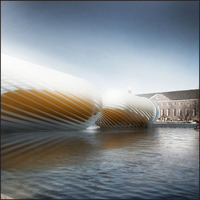
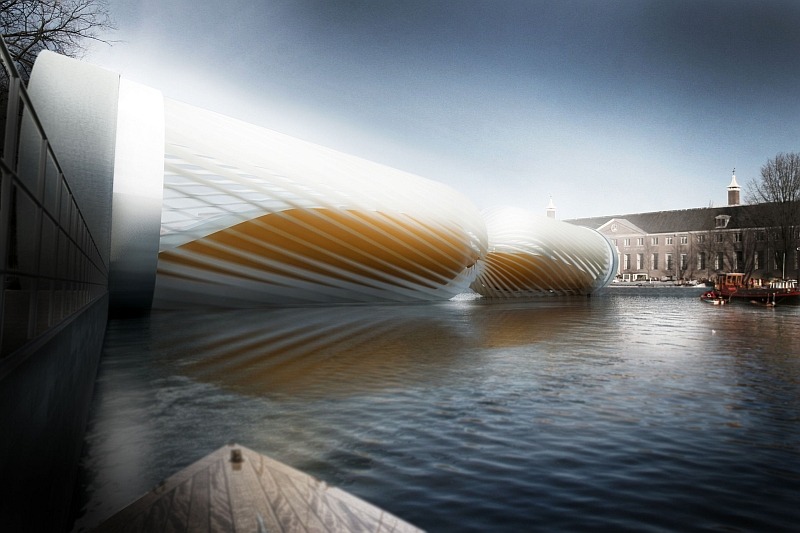
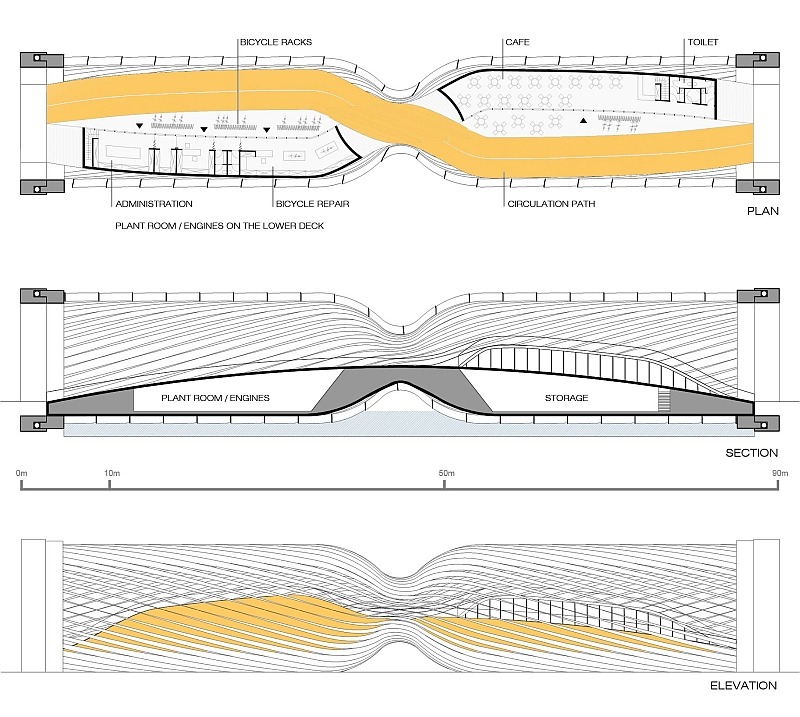
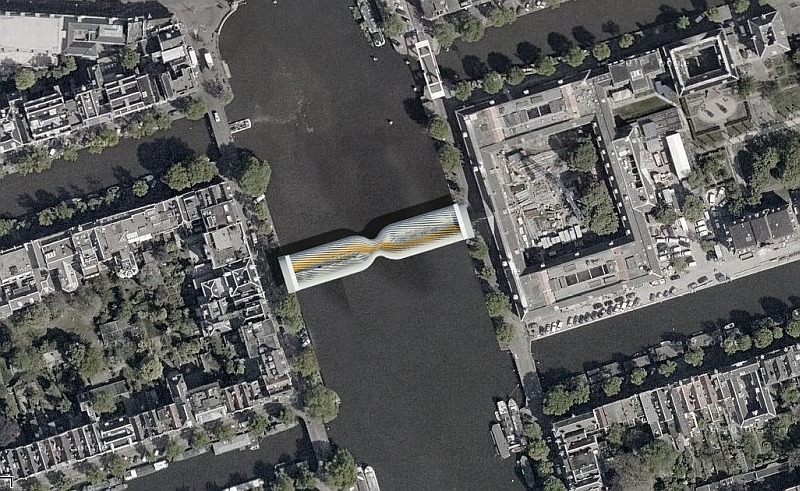
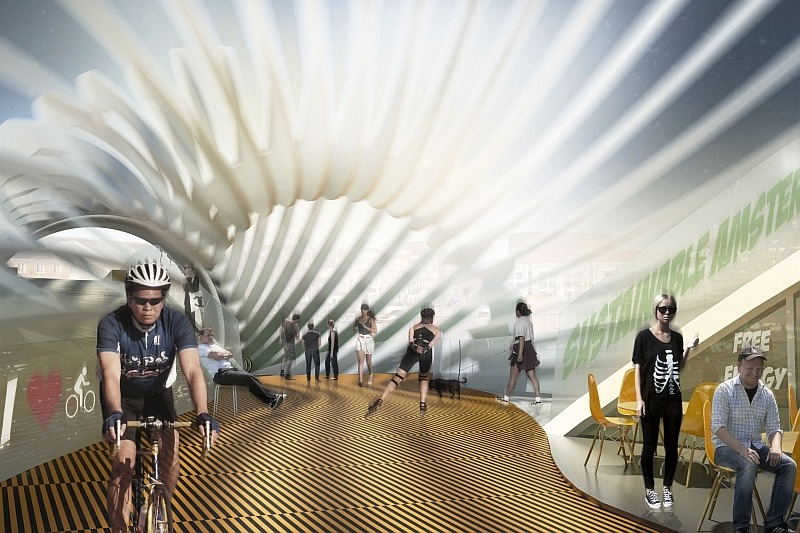
Turbine Bridge to propozycja na międzynarodowy konkurs “ Amsterdam Iconic Pedestrian Bridge”. Projekt to połączenie kładki dla pieszych oraz rowerów z elektrownią wodną. Obracająca się turbina napędzana jest nurtem rzeki kanału Amstel i generuje prąd, który zasila dodatkowe funkcje mostu. Na dolnym poziomie znajdują się chodniki, ścieżki rowerowe, kawiarnie, sklepy. Na drugim poziomie znajduje się przestrzeń przeznaczona do relaksu. Kształt kładki przypominający klepsydrę wynika z wymogu przepływu statków i barek po kanale. Samowystarczalny energetycznie most nawiązuje do holenderskich młynów a jego futurystyczny wygląd kontrastuję z zabytkową dzielnicą Amsterdamu w sąsiedztwie muzeum Hermitage.
/
EN
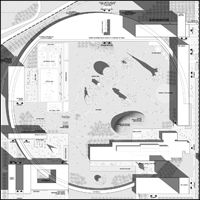
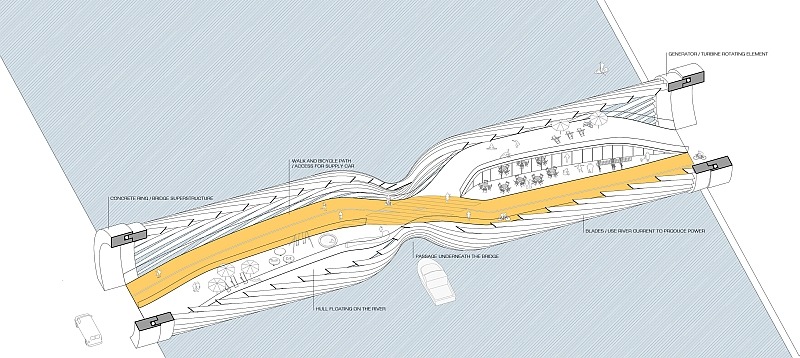
Turbine bridge is a connection between the traditional bridge and a hydroelectric power station. The rotating turbine is powered by river current and generates electricity. The bridge is self-sufficient and accumulates energy for additional needs. Moving facade creates dynamic, living architecture between the historic area. Curved shape of the blades makes that water flows back to the river after emersion. Turbine bridge is not only link between the two sides of the river. The idea was to create a multifunctional space on the Amstel River. For this purpose, its shape is designed as a giant ship's hull floating on the river. Main level of the bridge is a public space with pedestrian and bicycle path. There is also cafe, bicycle repair and administration office. On the roofs of this functions there are leisure terraces with playground. Plant rooms, turbine engines and storage are located underneath the deck. The characteristic shape of the bridge, referring to hourglass, is formed by the flow for a boat in the middle of the Amstel canal. In the centre of the bridge there is a meeting point for different decks and paths. A sustainable multi-functional watermill may reflect the ecological lifestyle of Amsterdam city.
location: Amsterdam, Netherlands
status: competition
year: 2012
team: Adam Wiercinski, Borys Wrzeszcz
Wyróżnienie honorowe w konkursie ASIA AWARDS oraz wystawa na fesiwalu Tokyo Designers Week 2013 /
Honorable mention in the competition ASIA AWARDS and exhibition at the festival Tokyo Designers Week 2013
PL
Turbine Bridge to propozycja na międzynarodowy konkurs “ Amsterdam Iconic Pedestrian Bridge”. Projekt to połączenie kładki dla pieszych oraz rowerów z elektrownią wodną. Obracająca się turbina napędzana jest nurtem rzeki kanału Amstel i generuje prąd, który zasila dodatkowe funkcje mostu. Na dolnym poziomie znajdują się chodniki, ścieżki rowerowe, kawiarnie, sklepy. Na drugim poziomie znajduje się przestrzeń przeznaczona do relaksu. Kształt kładki przypominający klepsydrę wynika z wymogu przepływu statków i barek po kanale. Samowystarczalny energetycznie most nawiązuje do holenderskich młynów a jego futurystyczny wygląd kontrastuję z zabytkową dzielnicą Amsterdamu w sąsiedztwie muzeum Hermitage.
/
EN
Turbine bridge is a connection between the traditional bridge and a hydroelectric power station. The rotating turbine is powered by river current and generates electricity. The bridge is self-sufficient and accumulates energy for additional needs. Moving facade creates dynamic, living architecture between the historic area. Curved shape of the blades makes that water flows back to the river after emersion. Turbine bridge is not only link between the two sides of the river. The idea was to create a multifunctional space on the Amstel River. For this purpose, its shape is designed as a giant ship's hull floating on the river. Main level of the bridge is a public space with pedestrian and bicycle path. There is also cafe, bicycle repair and administration office. On the roofs of this functions there are leisure terraces with playground. Plant rooms, turbine engines and storage are located underneath the deck. The characteristic shape of the bridge, referring to hourglass, is formed by the flow for a boat in the middle of the Amstel canal. In the centre of the bridge there is a meeting point for different decks and paths. A sustainable multi-functional watermill may reflect the ecological lifestyle of Amsterdam city.